

Boost Productivity and Simplify Note-Taking with Notta
In a world where meetings, conversations, online classes, interviews, and daily tasks generate a constant flow of information, keeping track of everything can be challenging. Important details can easily be missed when people try to listen carefully while also writing notes. Digital tools that help capture and organize information can make this process much easier. Notta offers a practical approach to recording conversations, creating transcripts, organizing notes, and managing information more efficiently.
Whether you are a professional attending frequent meetings, a student reviewing lessons, a researcher collecting information, or a content creator conducting interviews, having an organized way to handle spoken information can save valuable time. Instead of relying entirely on handwritten notes, users can explore a more structured digital workflow with Notta.
Make Note-Taking More Convenient with Notta

Traditional note-taking requires constant attention. While writing one sentence, it is possible to miss the next important point in a conversation. This can be especially difficult during fast-paced meetings or detailed discussions where several topics are covered in a short period.
Notta can support a more convenient note-taking process by helping users capture spoken information and turn conversations into written content. This allows people to concentrate more on the discussion itself instead of attempting to record every sentence manually.
A digital note-taking workflow can also make information easier to revisit later. Rather than searching through pages of handwritten notes, users can work with organized digital content and review important information when needed.
This can be particularly helpful for people who regularly participate in meetings, interviews, classes, or brainstorming sessions.
Capture Important Conversations and Meetings
Meetings often include multiple ideas, decisions, tasks, and follow-up points. Remembering everything after a long discussion can be difficult, especially when several meetings take place during the same day.
Notta can help create a more organized approach to capturing meeting information. By turning spoken discussions into written records, users can have useful material to review after a meeting has ended.
This can make it easier to identify important points and understand what was discussed. Teams can also use written meeting information when preparing follow-up tasks or reviewing decisions later.
For professionals, an organized record can reduce the need to repeatedly ask colleagues about information that was already discussed. It can also support a more consistent workflow when meetings involve multiple participants or complicated topics.
Turn Spoken Information into Useful Text
One of the most useful aspects of digital transcription is the ability to transform spoken conversations into written material. Instead of manually typing everything that is said, users can work with automatically generated text and then review the content according to their needs.
Notta can be useful for people who regularly deal with spoken information. Journalists, researchers, students, marketers, consultants, and content creators can all benefit from having conversations available in text form.
Once information is converted into text, it can become easier to review, organize, edit, and reference. Users can focus on extracting the most valuable ideas instead of spending excessive time creating notes from scratch.
This approach can also help people build a more efficient workflow around interviews and research. Important information can be revisited without requiring the entire conversation to be listened to again.
Improve Productivity During Busy Workdays
Modern professionals often move between meetings, emails, projects, presentations, and other responsibilities. Managing information efficiently can therefore have a direct impact on productivity.
Notta can become part of a broader productivity routine by reducing the amount of manual work involved in capturing spoken information. Instead of constantly switching between listening and writing, users can give more attention to the actual conversation.
This can be particularly valuable during brainstorming sessions. Creative discussions often move quickly from one idea to another, and manually recording every thought may interrupt the flow of the conversation. Having a digital record allows participants to stay engaged while preserving useful information for later review.
A better information workflow can ultimately help users spend more time analyzing ideas and completing meaningful tasks.
Support Learning, Research, and Interviews
Notta can also be useful beyond traditional business meetings. Students can benefit from having written versions of lectures or study discussions, making it easier to review material later.
Researchers can use transcription to organize information gathered through conversations and interviews. Having written content can make it easier to compare responses, identify recurring themes, and locate specific details.
Content creators can also find value in transcription when conducting interviews for articles, podcasts, videos, or other projects. Instead of manually typing long conversations, they can work from a digital transcript and focus on developing the final content.
These use cases demonstrate how digital transcription can support different types of information-heavy activities. The same basic workflow can be adapted to professional, educational, and creative environments.
Organize Information for Easier Review
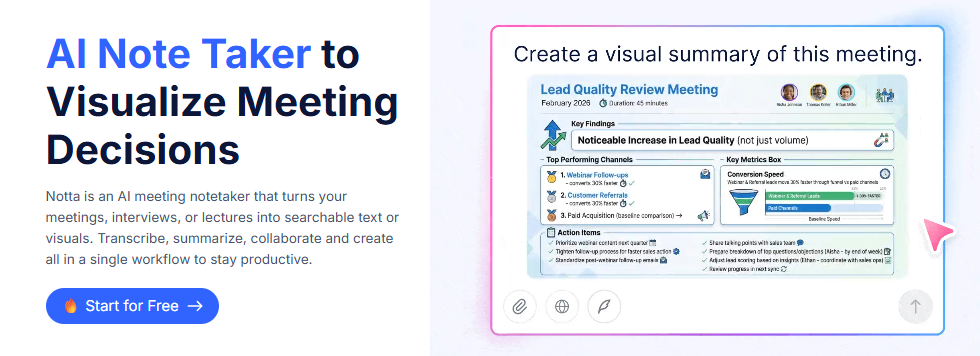
Capturing information is only one part of productivity. Being able to find and review that information later is equally important. A large collection of recordings and notes can become difficult to manage without an organized system.
Notta can help users build a more structured approach to handling their captured information. Written transcripts can make conversations easier to revisit, while organized notes can support a clearer understanding of previous discussions.
This can be particularly helpful when information needs to be reviewed days or weeks after a meeting. Instead of depending entirely on memory, users can return to their digital records and refresh their understanding.
Organized information can also make collaboration easier. When important discussions are documented clearly, people can work from the same information and reduce confusion around tasks, ideas, and decisions.
Create a Smarter Digital Note-Taking Workflow with Notta
Effective productivity is not always about doing more tasks. It is also about reducing unnecessary effort and creating systems that make everyday work easier. Notta can support this idea by helping users manage spoken information through digital recording, transcription, and note-taking workflows.
For professionals, it can make meetings more manageable. For students, it can support study and review. For researchers and content creators, it can simplify the process of turning conversations into useful written information.
A well-organized note-taking system can save time, improve accessibility to important details, and make information easier to revisit. Instead of relying entirely on memory or handwritten notes, users can create a more structured digital workflow around the conversations that matter.
As work and communication continue to become increasingly digital, tools like Notta can help people handle information more efficiently. By bringing greater organization to meetings, interviews, lessons, and conversations, Notta can become a useful addition to everyday productivity routines.